ISMB 400 vs W16×50: Why They're Not Equivalent
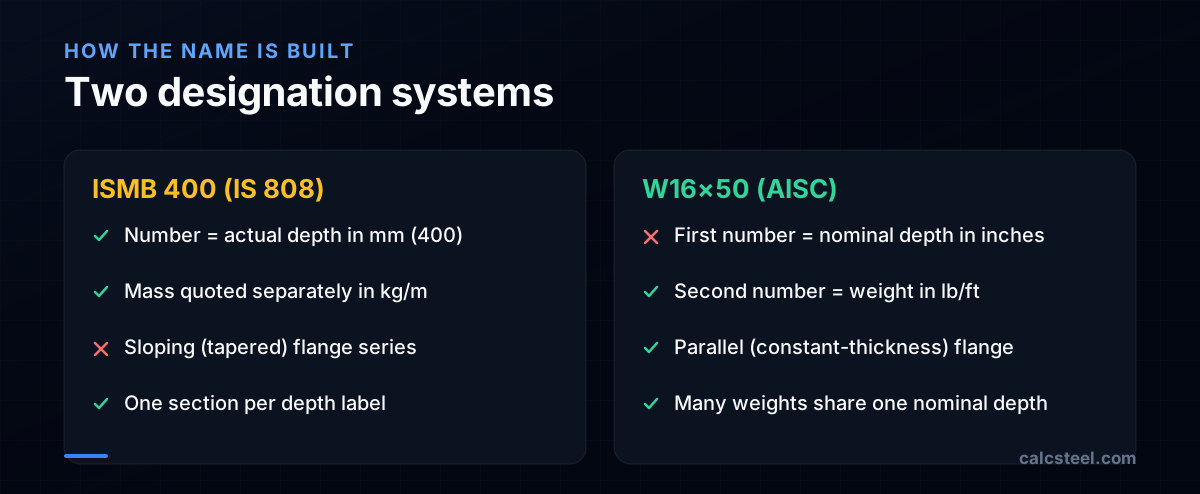
The question sounds simple: ISMB 400 is about 400 mm deep, W16×50 is about 414 mm deep, so are they the same beam under different names? They are close cousins, not twins. The depths nearly match, but the strong-axis stiffness, mass and flange width differ enough that swapping one for the other is a design decision, not a translation.
Key takeaways
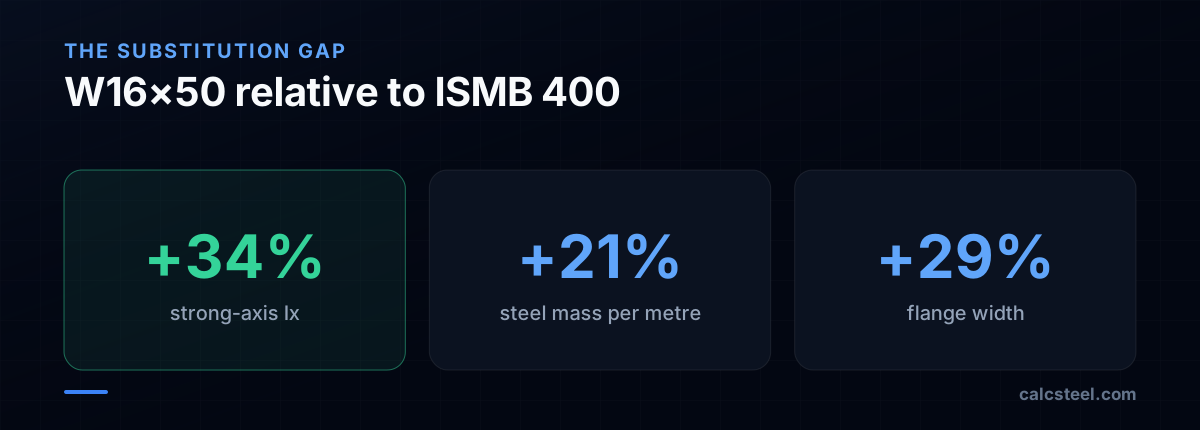
- ISMB 400 and W16×50 have similar depths (400 vs 414 mm) but W16×50 carries about 34% more strong-axis moment of inertia and 21% more steel per metre.
- The naming systems are built differently: an ISMB number is the actual depth in millimetres, while a W number is a nominal depth in inches paired with weight in pounds per foot.
- Section tables are standardized catalogs (IS 808 in India, the AISC Shapes Database in the US), each with its own rolling tolerances and flange geometry.
- By stiffness, ISMB 400 sits between W16×36 and W16×40, not at W16×50 — any real substitution must be re-verified against the governing code.
The question behind the question
Engineers reach for a cross-border "equivalent" for practical reasons: a drawing arrives specified in Indian sections but the steel will be fabricated to American stock, or a global firm wants one model that reviewers in two countries can both read. The instinct is to find a one-to-one swap — call ISMB 400 the same thing as W16×50 and move on.
The honest answer is that no two sections from different national tables are ever truly identical. They were rolled by different mills, dimensioned by different committees, and tabulated to different tolerances. The useful question is narrower: for a given member, is W16×50 a safe and economical stand-in for ISMB 400? To answer that you need the actual numbers, not the labels.
Where steel section tables come from
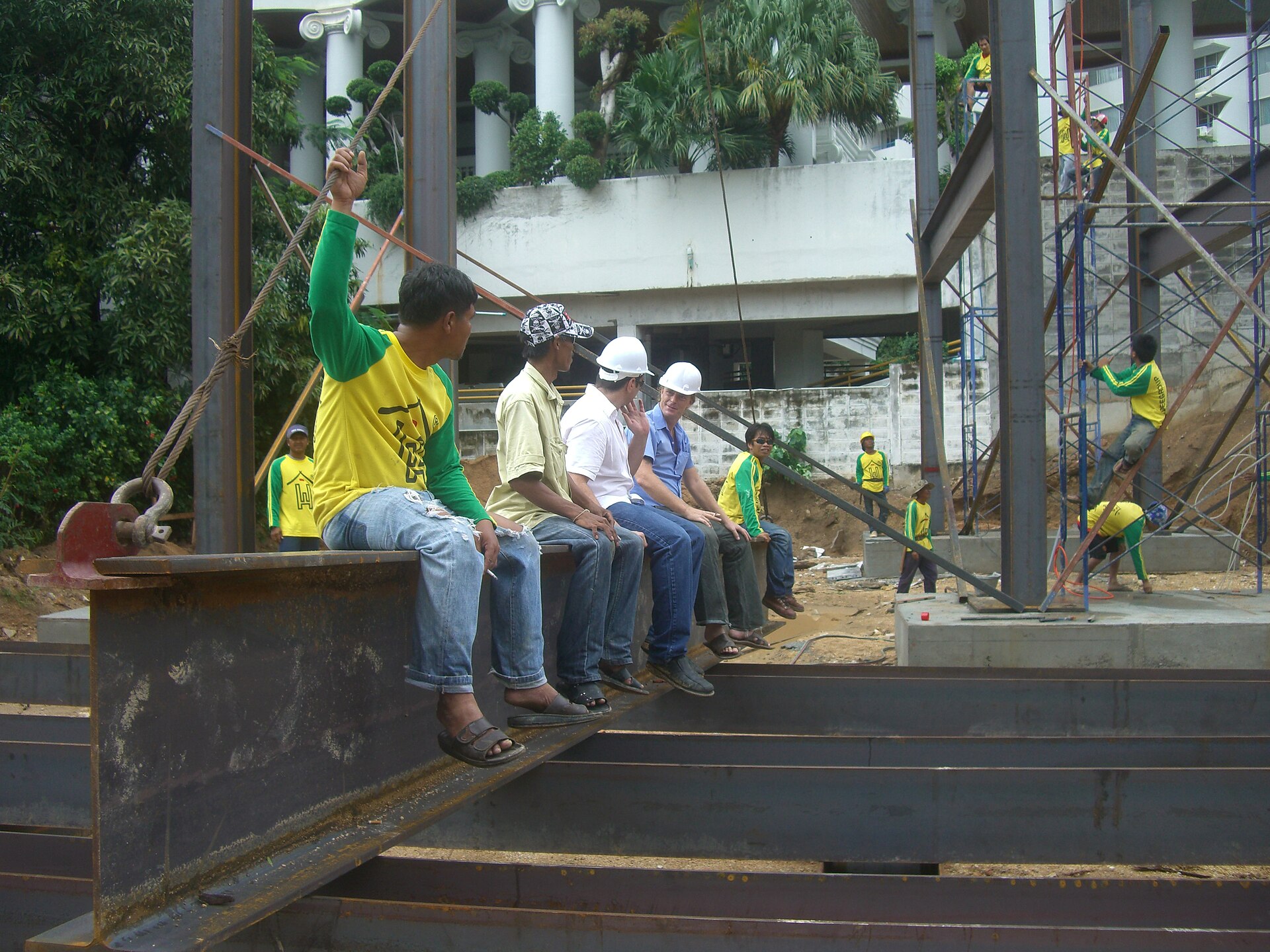
Neither designation is a marketing name — both trace to a national standard that fixes the geometry. In India the reference is IS 808, Dimensions for Hot Rolled Steel Beam, Column, Channel and Angle Sections, maintained by the Bureau of Indian Standards. Its lineage starts with IS 808:1957, evolved under a post-independence "steel economy programme" to rationalize the profiles Indian mills produced; it was revised in 1964 and again in the third revision adopted on 6 April 1989, which consolidated the earlier parts into the single standard that defines today's ISMB, ISLB, ISWB and related families.
In the United States the equivalent catalog is the AISC Shapes Database, the machine-readable descendant of the section tables that have appeared since AISC first published its Steel Construction Manual in 1927 — themselves built on mill references like the Carnegie Pocket Companion. Both catalogs publish the same kinds of values: dimensions, mass, area, moments of inertia, and section moduli. The properties are derived from the standardized cross-section geometry (area integrals over the shape), then rounded to the table's published precision.
Reading the two names correctly
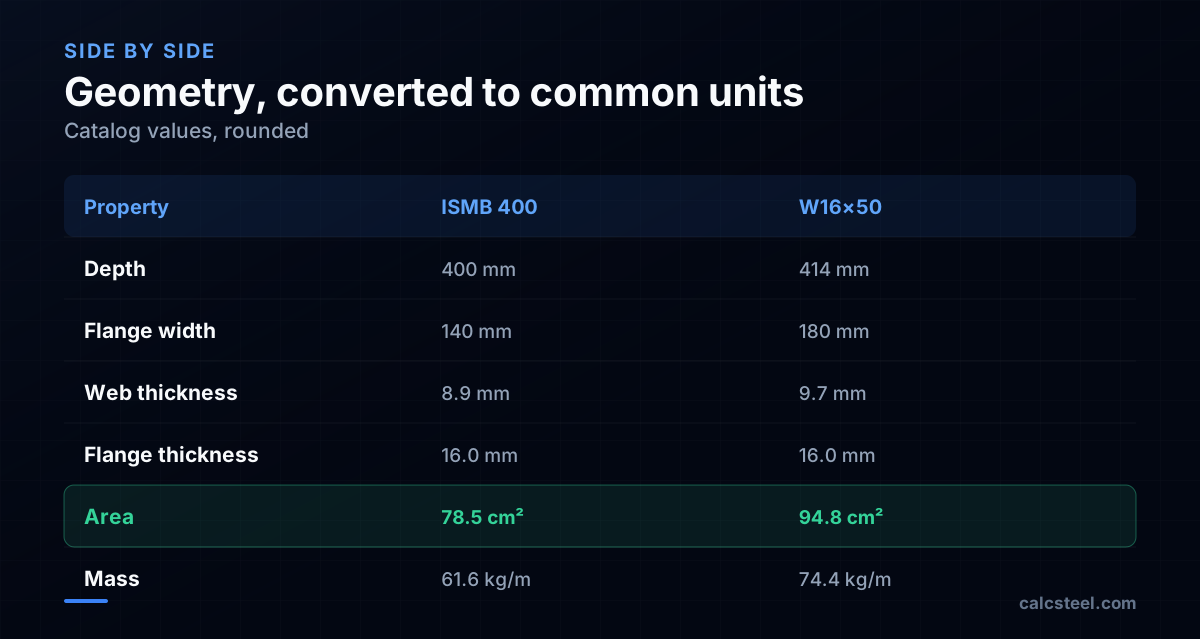
The labels encode different things, which is exactly why "400 ≈ 16 inches" feels like a match but isn't a guarantee. In IS 808, the number after ISMB is the actual nominal depth in millimetres: ISMB 400 is a beam about 400 mm deep, and its mass (61.6 kg/m) is quoted separately. There is essentially one ISMB section per depth label, and the flanges are sloping (tapered toward the tip), a legacy of older rolling practice.
An AISC W-shape packs two facts into the name. The first number (16) is a nominal depth in inches — not the true depth, which is 16.3 in (414 mm) here — and the second (50) is the weight in pounds per foot. Crucially, many different weights share one nominal depth (W16×26, W16×40, W16×50, W16×100…), all rolled with parallel flanges. So a single "W16" label is a whole family, while "ISMB 400" is one specific beam.
The numbers that actually govern design
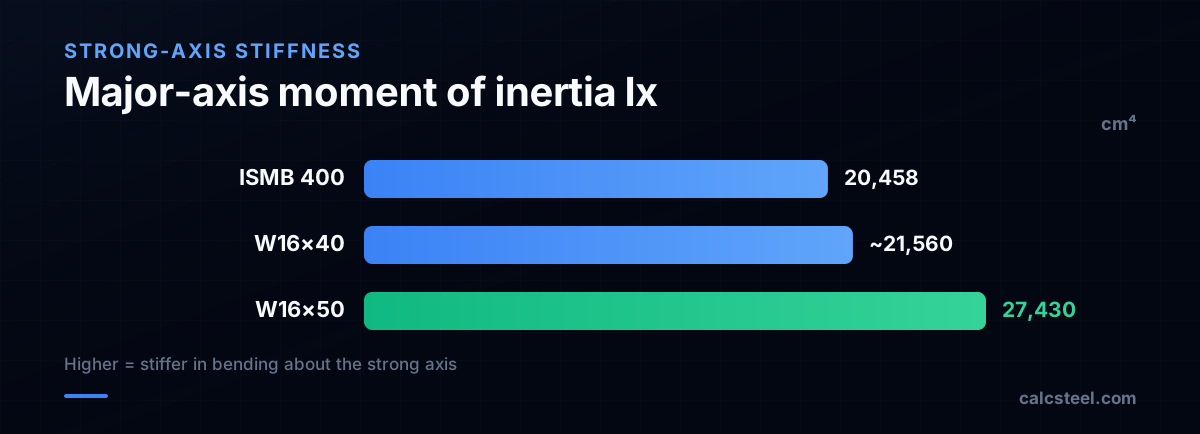
For a bending member, the values that matter most are the strong-axis moment of inertia, Ix (stiffness) and the section modulus (strength). Converted to common units, ISMB 400 has Ix ≈ 20,458 cm⁴ and a major-axis section modulus of about 1,023 cm³. W16×50 has Ix ≈ 27,430 cm⁴ (659 in⁴) and a far larger elastic modulus of about 1,327 cm³ (81 in³).
That is roughly 34% more strong-axis stiffness in the W16×50, achieved with about 21% more steel per metre and a flange that is nearly 30% wider. The wider, parallel flange also gives the American section more lateral-torsional and weak-axis capacity. In other words, W16×50 is the stronger, heavier beam — it would generally be safe in place of ISMB 400, but you would be paying for steel the original design may not have needed.
So what is the real match?
If "equivalent" means "closest section by strong-axis stiffness," ISMB 400's Ix of ~20,458 cm⁴ sits between W16×36 and W16×40 — well below W16×50. The depths happen to align with W16×50, but stiffness and mass do not. Picking by depth alone over-builds the member; picking by stiffness gives a leaner, more faithful substitute.
And even the "closest" section is only a starting candidate. A substitution can change the controlling limit state: a beam governed by deflection cares about Ix, one governed by lateral-torsional buckling cares about flange width and unbraced length, and a connection detailed for a 140 mm flange may not suit a 180 mm one. The two beams also obey different design codes — IS 800 in India and AISC 360 in the US — whose factors and buckling formulas differ. There is no universal lookup table that survives all of these at once.
- By depth: ISMB 400 ↔ W16×50 (414 mm) — looks closest, but over-strong.
- By stiffness/mass: ISMB 400 ↔ W16×36–W16×40 — the honest match.
- By code: neither is valid until re-checked under the governing standard.
Verdict: verify, don't translate
ISMB 400 and W16×50 are neighbours, not equals. The depths nearly coincide, but W16×50 is meaningfully stiffer, heavier and wider-flanged; if you need a true counterpart to ISMB 400 by stiffness, look around W16×40. The only defensible "equivalence" is one you re-run through the actual member forces and the governing code, because a swap can quietly change which limit state controls.
That is exactly the kind of check worth doing in software rather than a lookup table. CalcSteel is a browser-native structural editor (React/TypeScript front end, Python finite-element backend) with 1,140+ steel profiles spanning IS, AISC and European tables, and built-in code checks for NBR 8800, AISC 360, Eurocode 3 and IS 800. You can model a member with ISMB 400, swap in a W-shape candidate, and let the verification tell you whether it passes — on the free plan, with Pro at US$24/month billed annually for the heavier work. Try a substitution in the editor and check it, instead of trusting the name.
Sources
- 1.IS 808:1989 — Dimensions for Hot Rolled Steel Sections (Bureau of Indian Standards, full text)
- 2.ISMB 400 section properties (IS 808)
- 3.W16×50 AISC W-shape section properties
- 4.AISC — Historic Steel Construction Manuals (first edition 1927)
- 5.AISC Shapes Database v16.0
- 6.Image: Designer Mario Kleff — CC BY-SA 4.0 (Wikimedia Commons)
Try CalcSteel for free
Model, analyze and design steel structures in your browser. No install, no signup.
Open the 3D editor