How Do I Verify a Steel Column per NBR 8800?
Verifying a steel column to ABNT NBR 8800 is more than plugging numbers into a formula: it is the end of a forty-year arc that moved Brazil from allowable-stress design to a limit-states code aligned with North American practice. This deep-dive traces where the column-strength equation came from, what the 2008 (and now 2024) editions actually require, and exactly how software automates the check.
Key takeaways
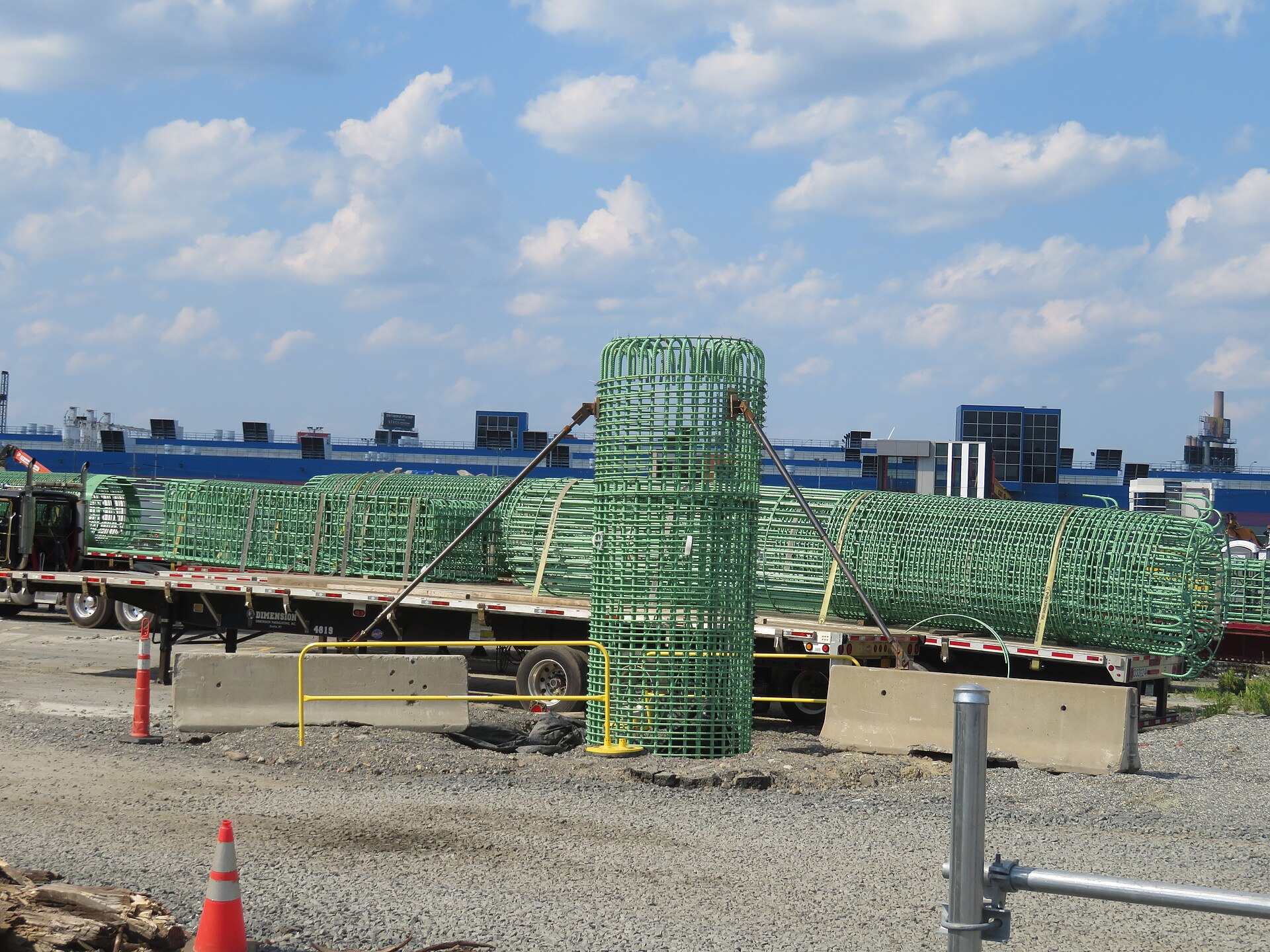
- NBR 8800 was first published in 1986, replacing allowable-stress design with the limit-states method; the 2008 second edition broadened composite design, and a third edition arrived in 2024.
- The column check reduces to one expression: Nc,Rd = chi*Q*Ag*fy/gamma_a1, with the reduction factor chi computed from the reduced slenderness lambda0.
- NBR 8800 adopts the same single column curve as AISC 360 (the 0.658 exponential + Euler form first published in AISC LRFD 1986), unlike Eurocode 3's five separate buckling curves.
- Software turns a multi-page hand calc into seconds: it finds the elastic buckling force Ne, derives lambda0, evaluates Q for local buckling, and reports the demand-to-capacity ratio.
Why the column check is the hard part
A steel column rarely fails by crushing. Long before the steel yields, an axially loaded member can buckle sideways, twist, or do both at once. That is why a code check for compression is fundamentally a stability problem, not a strength problem, and why it needs more than the yield stress and the cross-sectional area.
ABNT NBR 8800 — Projeto de estruturas de aco e de estruturas mistas de aco e concreto de edificios — is the Brazilian standard that governs this verification. Its column provisions look deceptively short, but they fold in a century of buckling theory: Euler's elastic critical load, the effect of residual stresses and out-of-straightness, and the interaction between global buckling of the whole member and local buckling of slender plate elements within the section.
Get any of those wrong and the result is either an unsafe column or an over-conservative, wasteful one. That is precisely the tension the code — and the software that automates it — has to resolve.
From 1986 to 2024: the birth and evolution of the code
The first edition, NBR 8800:1986, was a watershed. It replaced the older allowable-stress method with the limit-states method (LRFD-style partial factors), and — as a major innovation for its time — introduced provisions for composite steel-and-concrete construction that Brazilian practice was increasingly using.
By the early 2000s the code needed a rewrite. In May 2001 a working group of steel-structures specialists — professors and researchers from major Brazilian universities, with representatives of professional bodies and ABNT and support from the IBS (Instituto Brasileiro de Siderurgia / Brazilian Steel Institute) — began drafting the revision. The result, NBR 8800:2008 (second edition, dated 25 August 2008), broadened composite design to cover all composite structural elements and connections and brought the member-design rules into close alignment with AISC practice.
The story did not stop there. A third edition, NBR 8800:2024, folded the former buckling annexes into the main body, removed the 3.0 cap on the Cb (lateral-torsional buckling) coefficient so it can be obtained by numerical analysis, adjusted the fatigue stress limits in Annex H toward AISC/AWS values, revised bolt resistances, and added new annexes on floor vibration and steel durability. The column philosophy, however, carried through.
The equation you are actually checking
Once the philosophy is settled, the column verification collapses into a single design inequality: the design axial compression force must not exceed the design resistance.
The design compression resistance in NBR 8800:2008 is:
- Nc,Rd = chi · Q · Ag · fy / gamma_a1
- gamma_a1 = 1.10 (the resistance partial factor for yielding)
- Ag = gross area, fy = yield strength
- Q = local-buckling reduction factor (= 1.0 for non-slender sections; < 1.0 when plate elements are slender)
- chi = global-buckling reduction factor
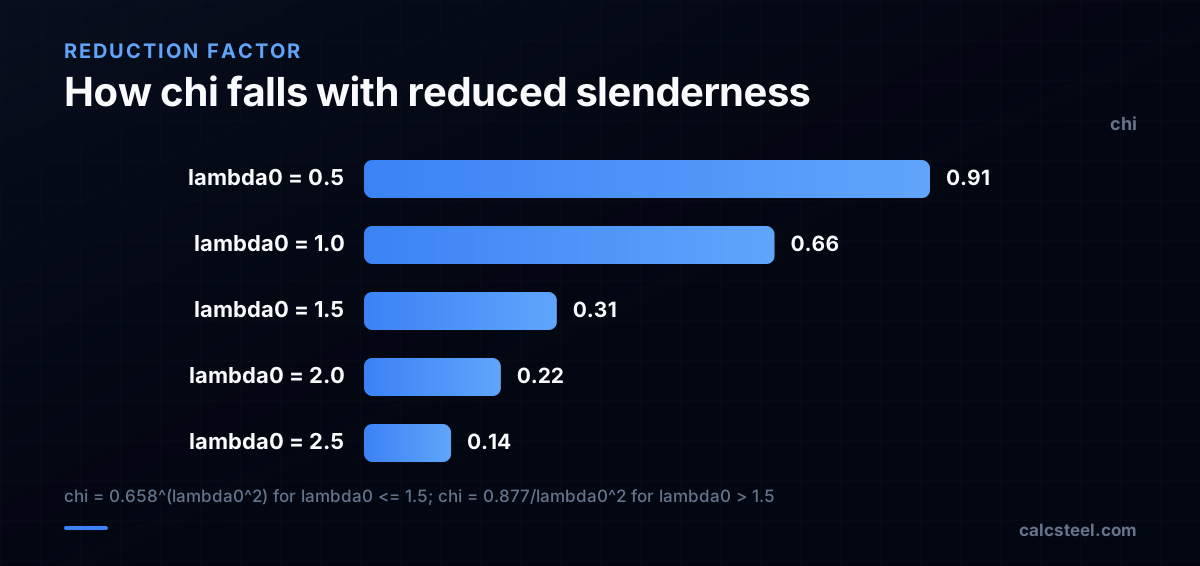
The reduction factor chi is a function of the reduced slenderness lambda0 = sqrt(Q · Ag · fy / Ne), where Ne is the elastic (Euler-type) critical buckling force of the member. The closed form is:
- for lambda0 ≤ 1.5: chi = 0.658^(lambda0^2) (inelastic range)
- for lambda0 > 1.5: chi = 0.877 / lambda0^2 (elastic / Euler range)
The 0.658 branch is an exponential fit to inelastic buckling; the 0.877/lambda0^2 branch is the Euler curve scaled by 0.877 to account for initial out-of-straightness.
Where the column curve really came from
That 0.658 number is not Brazilian in origin. It traces to the AISC LRFD Specification of 1986, where the column strength was first presented as an exponential equation in the inelastic range blended with the Euler equation in the elastic range. The supporting test data and calibration were presented at a Structural Stability Research Council (SSRC) meeting in Cleveland, Ohio, in 1985 — building on the column-curve research that the SSRC had championed for decades.
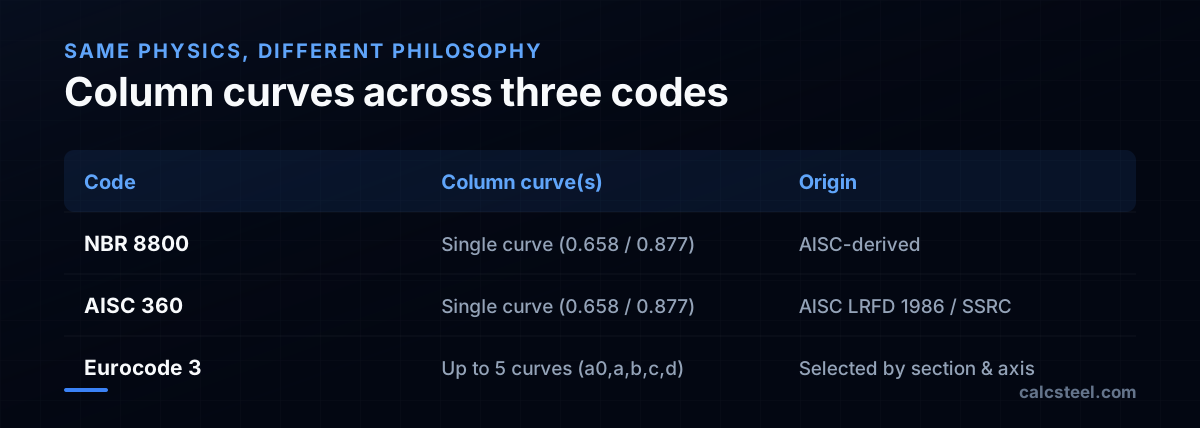
This matters for how NBR 8800 behaves. Brazil deliberately adopted a single column curve, the same approach as AISC 360, where one F_cr = 0.658^(Fy/Fe) · Fy relationship covers all rolled and welded shapes. Eurocode 3 took a different road, using up to five separate buckling curves (a0, a, b, c, d) selected by section type, fabrication, and axis. NBR 8800's member-design provisions are, as a result, often described as nearly identical to AISC 360.
So when you verify a column to NBR 8800, you are implicitly running a North-American calibration on Brazilian load and material factors — a genuinely hybrid lineage.
How software automates the verification
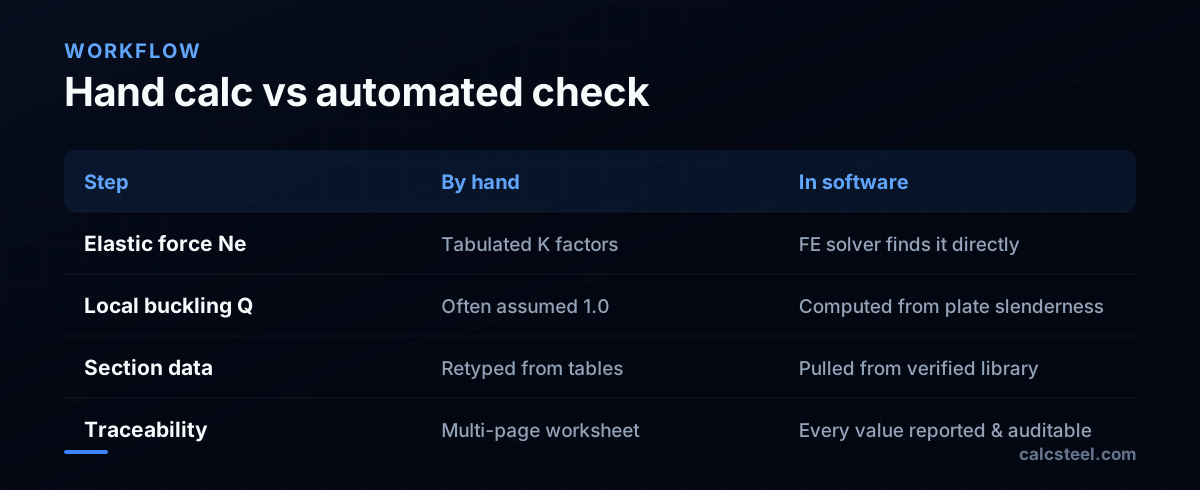
By hand, the column check is several pages: pick the effective length factor K for each axis, compute Ne for flexural, torsional and flexural-torsional modes, take the lowest, derive lambda0, evaluate Q (which itself needs Qs and Qa for slender flanges and webs), then chi, then Nc,Rd, then the demand-to-capacity ratio.
Software compresses this to a fraction of a second and removes the most common error sources:
- Buckling modes — a finite-element solver finds the real elastic critical force Ne instead of relying on tabulated K factors, capturing flexural-torsional behaviour automatically.
- Local buckling — Q is recomputed from the actual plate slendernesses of the chosen section, not assumed to be 1.0.
- Section data — properties (Ag, radii of gyration, torsion constants) are pulled from a verified profile library rather than retyped.
- Traceability — every intermediate value (Ne, lambda0, Q, chi) is reported, so the check is auditable, not a black box.
The payoff is iteration speed: an engineer can try ten sections in the time a hand calc resolves one.
Verdict: trust the code, automate the arithmetic
Verifying a steel column to NBR 8800 is conceptually simple — one inequality — but the work is in everything feeding chi and Q: effective lengths, elastic buckling modes, local-buckling factors, and material partial factors. The code's lineage (limit states from 1986, composite design broadened in 2008, the AISC-derived single column curve, and the 2024 refresh) is what makes the result both safe and economical when applied correctly.
That is exactly the kind of bookkeeping software should own. CalcSteel is a browser-native structural tool — a React/TypeScript front end with a Python finite-element backend — that runs code checks for NBR 8800, AISC 360, Eurocode 3 and IS 800 against a library of 1,140+ steel profiles. It has a free plan, with Pro reported at US$24/month billed annually. You can build a frame, apply loads, and read the column demand-to-capacity ratio with every intermediate value exposed in the editor. Use it to check the arithmetic; keep the engineering judgement yours.
Sources
- 1.SciELO Brazil — Sobre a revisao da NBR 8800 (history of the 1986 and 2008 editions; May 2001 working group, IBS)
- 2.NBR 8800:2008 official text (ABNT, second edition, 25.08.2008)
- 3.UFPR Estruturas — Capitulo 5: Compressao (NBR 8800 chi formula, lambda0 <= 1.5 threshold)
- 4.Gerdau Mais — Novidades da ABNT NBR 8800:2024 (Cb cap removed, new annexes I and K)
- 5.AISC Engineering Journal — Derivation of the LRFD Column Design Equations (AISC 1986, SSRC Cleveland 1985)
- 6.CalcSteel — AISC 360 / NBR 8800 standards documentation
- 7.Image: Pi.1415926535 — CC BY-SA 3.0 (Wikimedia Commons)
Try CalcSteel for free
Model, analyze and design steel structures in your browser. No install, no signup.
Open the 3D editor