Free Alternatives to CYPE 3D, SAP2000 and Robot
"Is there a free alternative to CYPE 3D, SAP2000 or Robot Structural?" is one of the most asked questions in structural engineering forums. The honest answer needs context: these tools cost thousands of dollars a year today, yet the ancestor of SAP2000 was once given away for free. Here is how the price tags appeared, what they really cost now, and where a browser-native free option fits.
Key takeaways
- The original SAP was written in FORTRAN at UC Berkeley around 1970 and distributed free to more than 1,000 users by 1974, before the lineage was commercialized.
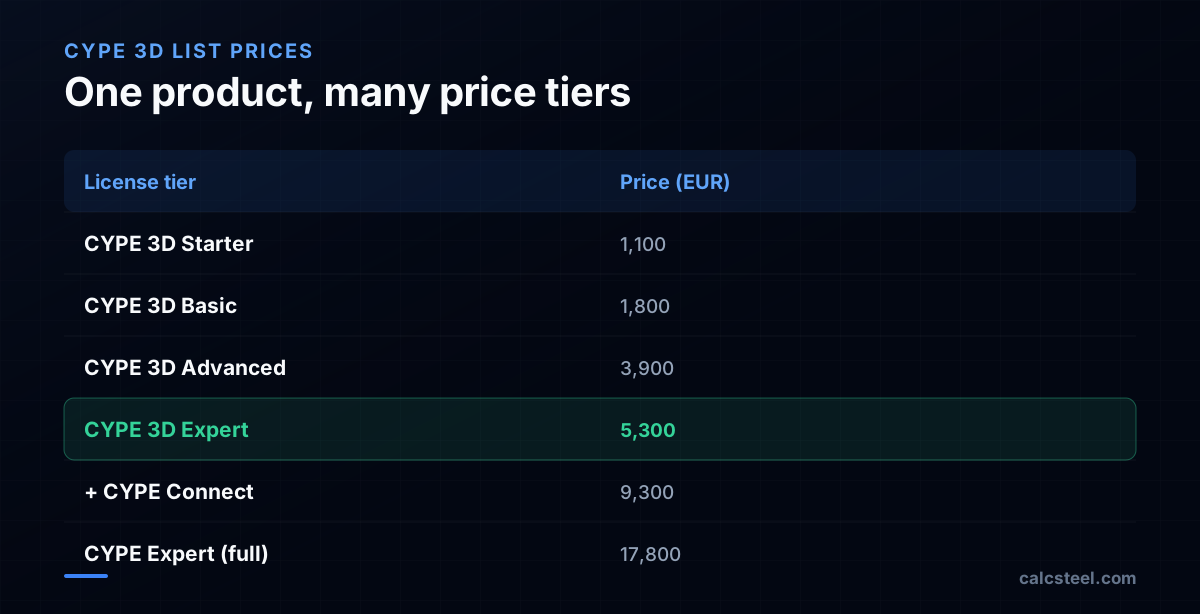
- Today the three giants are firmly commercial: CYPE 3D ranges from EUR 1,100 to EUR 17,800 on CYPE's own shop, Robot ships inside Autodesk's AEC Collection (reported around US$3,115 to US$3,795/yr), and SAP2000 is quote-only (perpetual seats reported in the several-thousand-USD range).
- Most vendor pricing is not published openly, so engineers compare third-party reseller figures and collection bundles rather than clean per-seat list prices.
- Genuinely free options now exist as browser-native finite-element tools; CalcSteel offers a free plan plus a US$24/month (billed annually) Pro tier with code checks for NBR 8800, AISC 360, Eurocode 3 and IS 800.
The irony: structural software started free
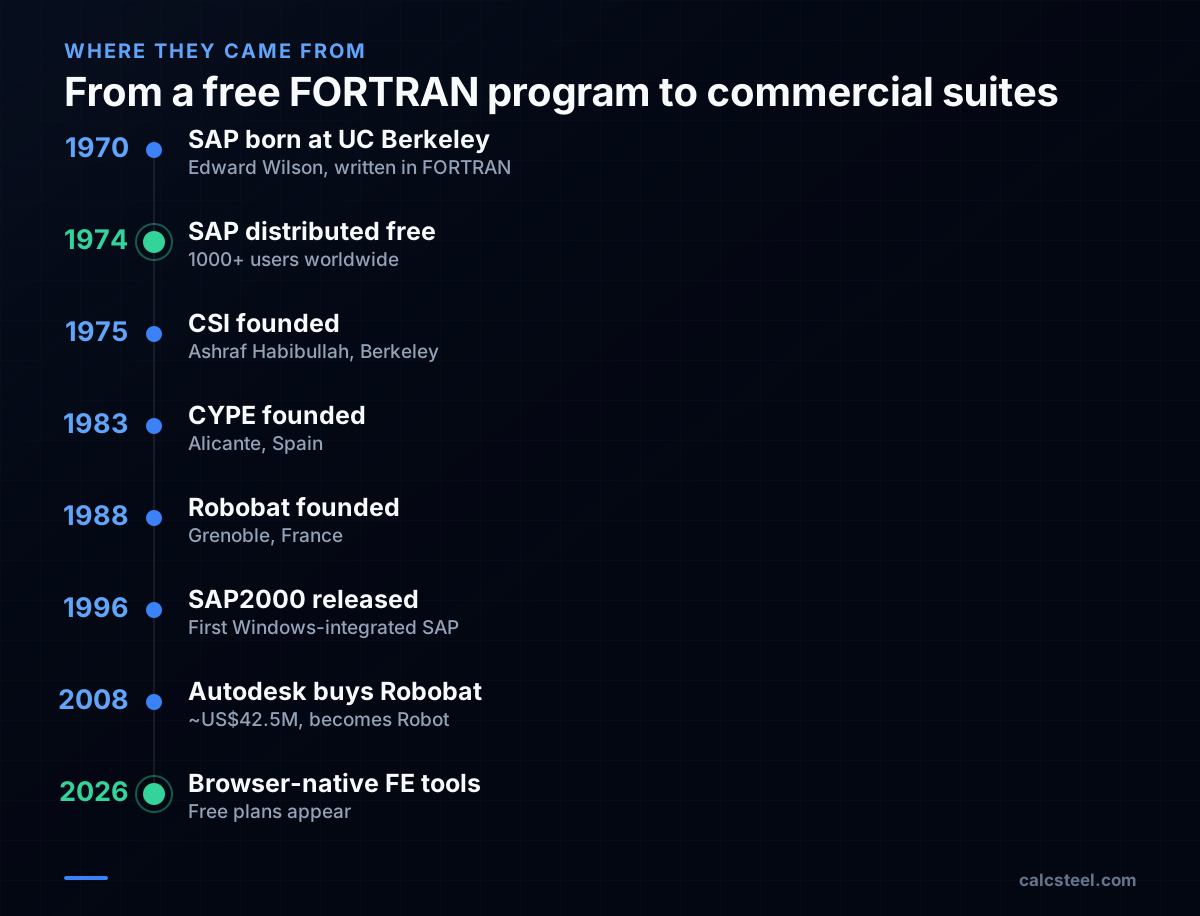
The question assumes these tools were always expensive. They were not. The Structural Analysis Program (SAP) was created by Edward L. Wilson at the University of California, Berkeley, and first developed around 1970 (some sources place its initiation in 1969). It was written in FORTRAN, ran on mainframes, and according to Berkeley's earthquake-engineering archive was distributed freely to more than 1,000 users worldwide by 1974.
In other words, the great-grandfather of today's SAP2000 was effectively open and free. The commercial era began in 1975, when Ashraf Habibullah founded Computers and Structures, Inc. (CSI) in Berkeley to support and develop the SAP lineage. The free academic program and the paid product diverged from there.
How CYPE, SAP2000 and Robot grew up
Each of the three tools in the question has a distinct lineage. SAP2000 arrived in 1996 as the first SAP version completely integrated within Microsoft Windows, the modern descendant of Wilson's mainframe code.
CYPE was founded in 1983 in Alicante, Spain; its flagship CYPECAD reached the market in 1991, and CYPE 3D became its general steel/timber/concrete frame module. Spanish press credits CYPE with helping democratize structural calculation that had previously sat with a few specialist offices.
Robot grew out of ROBOT software written in the early 1980s by André Niznik; Robobat was formally established in 1988, headquartered in Grenoble, France (with later Polish operations under the BIMware brand). Autodesk acquired Robobat (deal value reported around US$42.5 million, completed January 2008), rebranding the technology as Robot Structural Analysis Professional and folding it into the Autodesk ecosystem.
What they actually cost in 2026
This is where transparency gets hard. None of the three vendors publishes clean per-seat list prices for everything openly; pricing is largely quote-driven, region-specific, and bundled. What we can responsibly report comes from vendor shop pages, the Autodesk collection page, and third-party resellers.
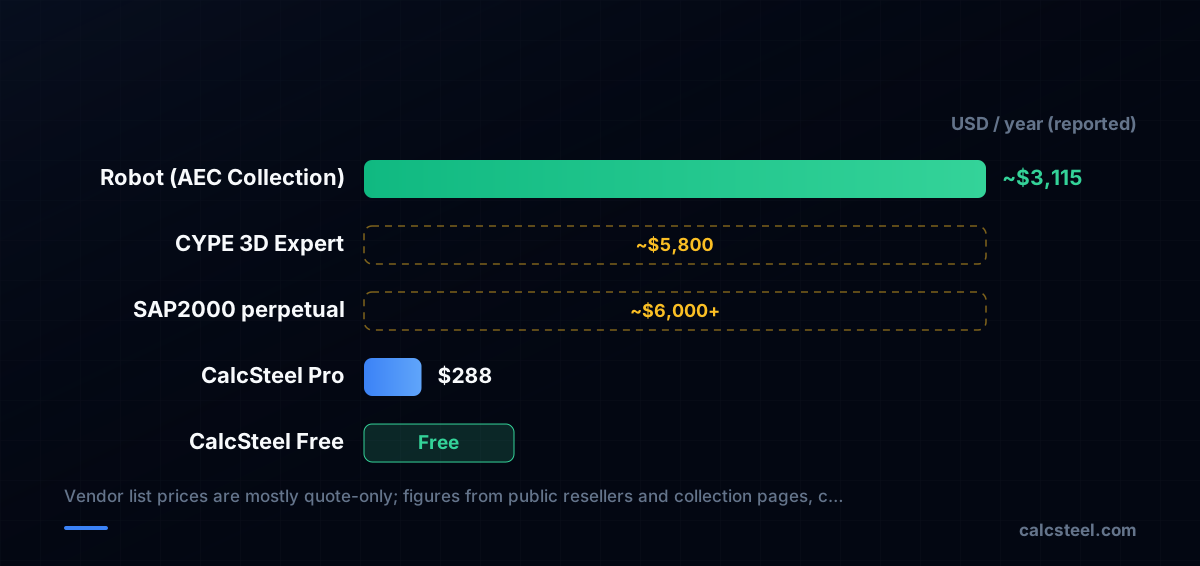
- Robot is sold inside the Autodesk AEC Collection, with list pricing reported in the range of roughly US$3,115 to US$3,795 per user per year depending on source and region.
- CYPE 3D is openly tiered on CYPE's shop, from EUR 1,100 (Starter) to EUR 5,300 (Expert), with full CYPE bundles reaching EUR 17,800.
- SAP2000 stays quote-only; resellers have reported perpetual seats in the several-thousand-USD range.
Treat the bars below as reported ranges, not official list prices.
Why 'the price' is never one number
A common frustration is that there is no single price for any of these tools. CYPE 3D alone is sold as a ladder of capability tiers, and the more useful modules sit higher up. The same logic applies to SAP2000 (Plus, Advanced, Ultimate) and to Robot, whose value is partly the Revit/BIM integration that justifies the collection bundle.
For a small consultancy or an individual engineer, this means the headline starter price rarely matches the real working configuration. The practical cost of doing steel frame design in any of these suites tends to land in the several-thousand-currency-units-per-year bracket once you reach a tier that covers serious code checking.
So is there a genuinely free alternative?
Yes, with caveats. The free options fall into a few buckets:
- Open-source FE engines (e.g. solver libraries and academic codes) are free but typically demand scripting and offer little design-code automation.
- Free tiers of commercial calculators often cap model size or lock exports.
- Browser-native finite-element apps are the newest category: nothing to install, models in the cloud, and a real free plan.
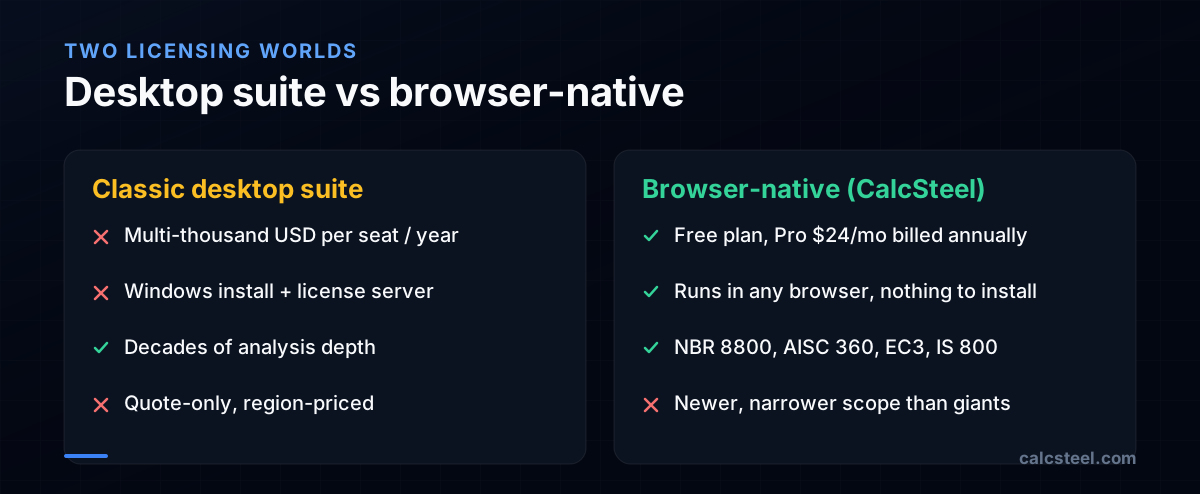
The trade-off is honest. The desktop giants carry decades of validated analysis depth, nonlinear and dynamic capability, and BIM integration that a young browser tool does not fully match. But for a large share of everyday steel work, the gap that matters is access, not raw solver exotica.
Verdict: free is real, scope is the question
If your question is literally "can I do structural steel design without paying thousands a year," the answer in 2026 is yes. The ancestor of SAP2000 was free; the modern, browser-native generation has brought free access back, this time with built-in design codes rather than raw FORTRAN.
CalcSteel is one such option, and we will be transparent about what it is: a browser-native app with a React/TypeScript front end and a Python finite-element backend. It offers a free plan plus Pro at US$24/month (billed annually), ships 1,140+ steel profiles, and runs code checks for NBR 8800, AISC 360, Eurocode 3 and IS 800. It is newer and narrower than CYPE, SAP2000 or Robot, and we do not pretend otherwise. For many steel frames, though, it does the job without an install or a four-figure invoice. You can open the editor and model something today, for free.
Sources
- 1.Edward L. Wilson — Wikipedia (SAP origins at UC Berkeley)
- 2.Ashraf Habibullah — Wikipedia (CSI founded 1975)
- 3.CYPE 3D — CYPE Shop (license tier prices in EUR)
- 4.Autodesk Completes Acquisition of Robobat (Jan 2008, ~US$42.5M)
- 5.History of Robobat and the BIMware Brand
- 6.Autodesk AEC Collection — Overview and pricing
- 7.Image: SSJF01 — CC0 (Wikimedia Commons)
Try CalcSteel for free
Model, analyze and design steel structures in your browser. No install, no signup.
Open the 3D editor